Autores:
Donating to Deduct Taxes: The Junk Food Industry's Strategy
Fecha de publicación:
15 de diciembre de 2024, 11:57
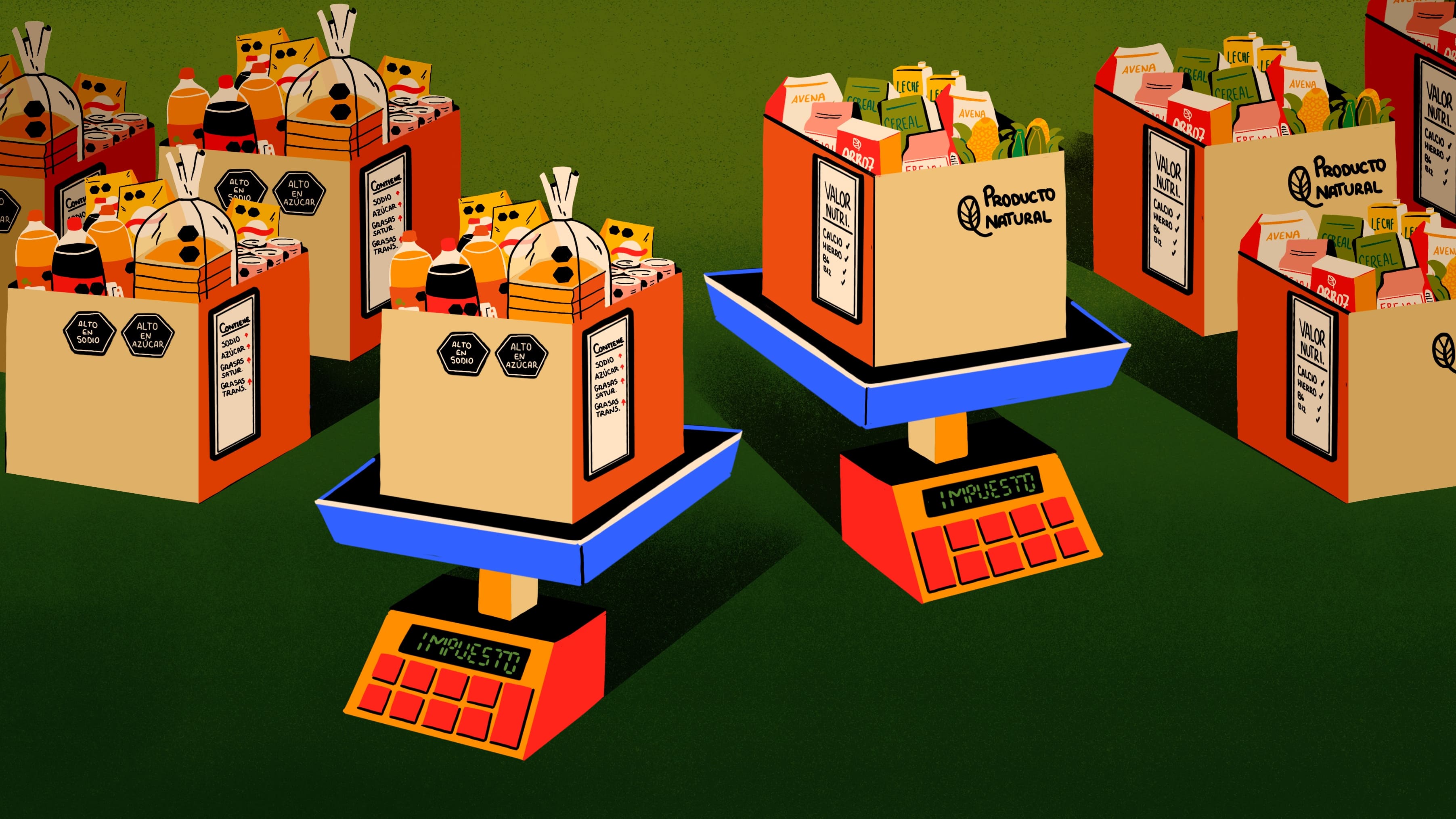
Companies that donate ultra-processed products (such as sodas and snacks) in Latin America can access tax privileges that allow them to deduct their tax payments. An investigative report by the Cross-Border Investigative Network of OjoPúblico and POPLab found that while Brazil sets a 2% cap for these deductions, Colombia allows up to 37%. In Mexico, it is 7%, and in Peru, 10%. Experts argue that these tax incentives only promote greater consumption of ultra-processed products, which will impact the economy through the increase in non-transmissible diseases and, consequently, public health costs.
By Elena Miranda and Kennia Velázquez
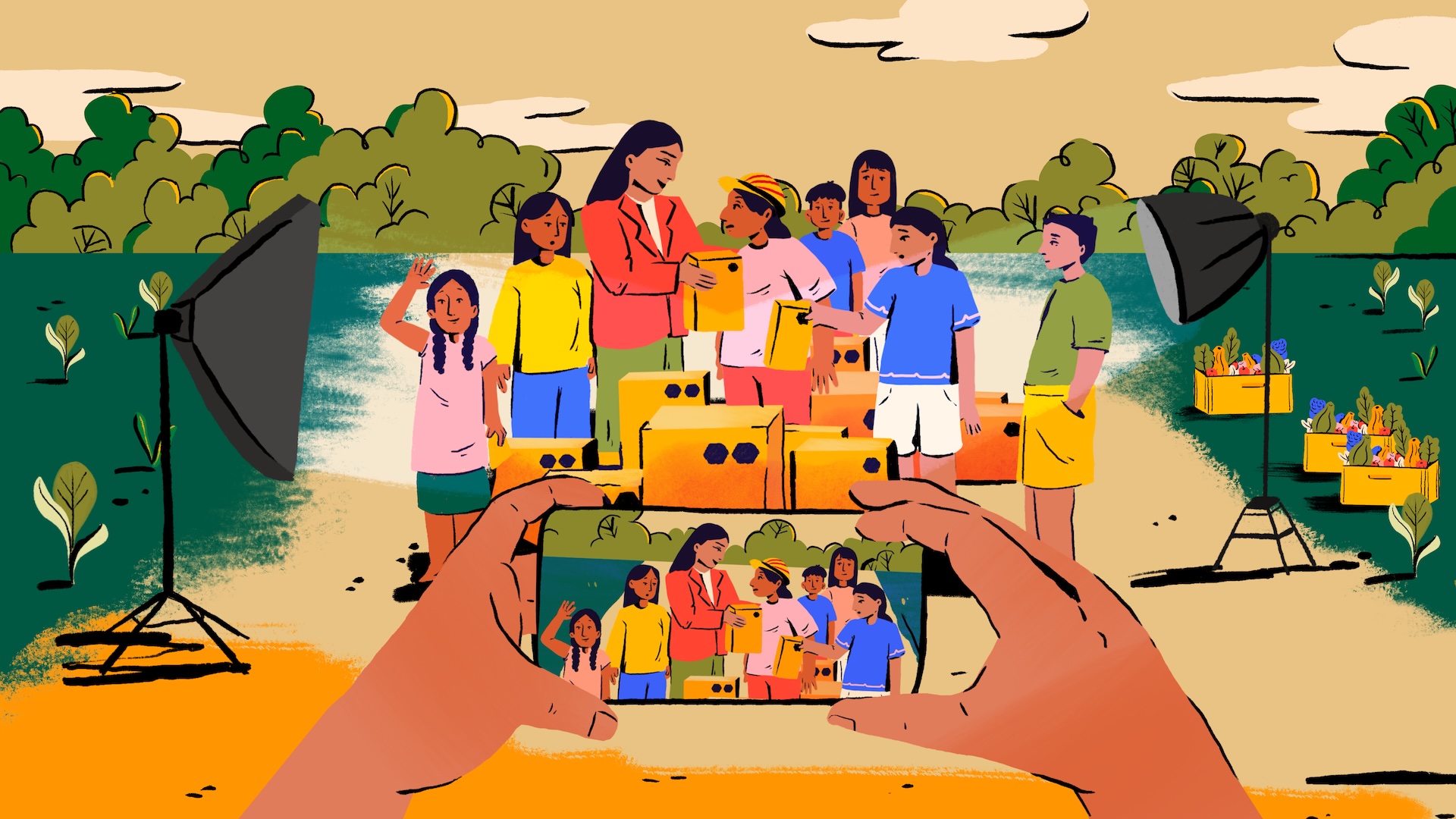
Ultra-processed food companies not only use the donation of their products as part of a marketing strategy to reach new consumers, but they also use these expenses to deduct tax payments. The Cross-Border Investigative Network of OjoPúblico analyzed legislation promoting these tax benefits for the industry.
In Peru, Mexico, Colombia, and Brazil, the regulations allowing these deductions are not related to the nutritional quality of the donated products, which are mainly directed toward the most vulnerable populations, such as children and the elderly living in poverty. This section of the population is, additionally, one with the highest risks for diabetes.
In Latin America, the percentage of tax deductions available to a company donating high-sugar beverages is the same as for a company providing meat, vegetables, fruits, or legumes.
The investigation into the deduction caps reveals significant differences. Colombia has the highest cap: companies donating food products (of any kind) can deduct up to 37% of their taxes.
In Peru, companies can deduct up to 10% of their net income, provided this does not exceed 1.5% of their annual net sales value of food.
In Mexico, deductions are allowed for up to 7% of taxable income for individuals and companies. Brazil, however, is the strictest, with a limit of just 2%.
The monetary amounts of these tax deductions remain undisclosed due to tax secrecy, which protects taxpayer information, and companies benefiting from these deductions do not disclose their figures.
From Peru, Abilia Ramos, leader of the community kitchens network—self-managed by women to guarantee nourishment for the poorest families—believes it is unfair for companies donating sodas and chips to receive the same benefit as those donating rice, beans, and other nutritious supplies essential for their kitchens.
“They’re not doing us any favors. The government is reducing their taxes. If they get that reduction, they should provide quality food (…) They shouldn’t be giving us sodas or cookies. That doesn’t feed anyone,” says Ramos, president of the Common Kitchens Network of San Juan de Lurigancho, Peru's most populous district.
Other leaders share a similar view. Fortunata Palomino, president of the Common Kitchens Network of Metropolitan Lima, finds it contradictory that the same government training them to prepare healthy meals benefits companies donating junk food.
However, she acknowledges that when ultra-processed foods are donated, they accept and distribute them among diners, even knowing these products are not healthy. For this reason, Palomino, Ramos, and other community kitchen leaders have requested that Peruvian authorities review legislation regarding taxes and donations.
Million-Dollar Deductions
As part of this investigation, the Cross-Border Investigative Network of OjoPúblico estimated—with the support of tax experts—the maximum amounts companies could save based on legal percentages and the information companies declare in their financial reports and annual statements.
For example, in Peru, one of the largest donors is Arca Continental Lindley, the company that bottles and markets Coca-Cola products in the country. The tax deduction cap for donations made in 2022 could amount to S/10.08 million (USD 2.6 million).
This reduction is equivalent to 10% of its net income (S/110 million) and is below the legal limit of 1.5% (S/38.2 million) of its reported net sales that year, amounting to S/2.546.5 million.
Last year, Arca Continental Lindley was recognized by Banco de Alimentos Perú—a nonprofit organization—as one of the companies that donate the most. This company donated to the Food Bank and the Bienaventuranzas Association over 500,000 liters of its products.
In 2020, Coca-Cola Peru (which also markets brands like Inca Kola, Fanta, Sprite, Del Valle Frugos, Powerade, and San Luis) ranked among the top 10 donors of processed products.
In Peru, Colombia, and Mexico, individuals or companies must donate to beneficiaries authorized by their respective tax authorities to access these tax benefits. In Brazil, however, donations can be made to any public-interest civil society organization.
From Brazil, nutritionist Ana Paula Bortoletto emphasizes the need for stricter rules regarding the quality of donated food.
"Industries have the ability to donate healthy, minimally processed foods that are fundamental for adequate nutrition, but for reasons of convenience, costs, and resources, they opt to donate ultra-processed products," says Bortoletto, who is also a researcher at the Latin America and Caribbean Nutrition and Health Community of Practice (known in Spanish as Colansa), which promotes public policies for healthier food systems.
In addition to tax deductions, ultra-processed product companies also enjoy other benefits. Companies save costs by no longer having to store products that have lost their commercial value (nearing expiration or with packaging or labeling issues) nor do they have to transport them for incineration, as highlighted by Food Bank Perú manager Daniela Osores in a 2020 interview with El Peruano.
Companies can also boost sales with campaigns temporarily promoting a particular product while offering to donate a percentage of the revenue from each unit sold. For instance, a campaign by the multinational Mondelez, in coordination with Food Bank Perú, promised to deliver food portions for 3,000 impoverished people financed with a percentage of the revenue from the sales of cookies, chocolates, gum, and other FIELD-brand products at a Peruvian supermarket between July and August 2024.
Mondelez, along with multinationals Coca-Cola, Grupo Bimbo, Kellogg's, and Nestlé, is among the 44 main donors to the Global Food Banking Network, which includes more than 700 food banks across 50 countries, including Peru, Mexico, Brazil, and Colombia, according to this organization’s 2023 annual report.
Donations made by ultra-processed food companies are part of their corporate social responsibility actions, though they often resemble advertising and marketing campaigns.
From Peru, advertising expert Juan José Tirado explains that marketing aims to boost sales and business profits, while corporate social responsibility focuses on improving the company’s reputation. "While one is more commercially focused, the other is about reputation. However, combined, they create the company’s corporate image," he adds.
Unlike advertising, Tirado says the impact of corporate social responsibility isn’t measured in monetary terms but rather in reputation, as it concerns relationships rather than transactions. For this reason, he emphasizes that the most successful actions are those that impact people’s everyday lives and improve them.
Rising Revenue
Some ultra-processed food and beverage companies have increased their revenue and profits in recent years. According to their annual financial reports worldwide, Coca-Cola earned USD 10.714 billion in 2023, a 12% increase from the previous year. During the same period, Kellogg's reported profits of USD 110 million, a 540% rise; Mondelez earned USD 4.371 billion, an 82.5% increase; and Nestlé generated USD 12.7 billion, up 20.9% from the prior year.
"The marketing practices of the ultra-processed product industry have become normalized despite helping create unhealthy environments, serving as corporate-washing tactics, and displacing traditional food cultures, thereby exploiting vulnerable communities and the environment," says a 2022 report by The Global Health Advocacy Incubator, an organization promoting public health policies in 30 countries.
From Argentina, Verónica Schoj, vice president of this organization's Food Health Program, recommends that governments go beyond regulating marketing for ultra-processed products in traditional media. "Broad regulation is also required to address sponsorship of sports and cultural events, corporate social responsibility strategies, financial support, and deceptive packaging advertising," she warns.
Schoj explains that "the COVID-19 pandemic highlighted the need for robust regulatory frameworks to prevent just any donation. If food is donated to a vulnerable population, it must ensure their right to healthy nutrition. The government is responsible for not accepting any donation," she states.
During the pandemic, the United Nations (UN) and UNICEF emphasized the importance of humanitarian action being carried out without causing collateral damage.
As various studies have pointed out, there is a close relationship between consuming ultra-processed products and sugary drinks with increased diabetes and cancer cases.
Guidelines Recommend Avoiding Ultra-Processed Foods
To support the formulation of national food and nutrition policies, over 100 countries worldwide have developed dietary guidelines offering recommendations on healthy eating and lifestyles.
A comparative analysis of these guidelines reveals differences between countries. While those in Peru, Colombia, and Brazil refer to food processing levels, this is not the case in Mexico.
Peru and Brazil recommend avoiding ultra-processed foods to prevent diseases, while Colombia doesn’t use these terms but suggests avoiding "packaged products."
In Brazil, dietary guidelines are recognized by multiple public institutions and align with existing public policies. Meanwhile, in Mexico, they lack recognition; in Colombia, they are not integrated with other policies but are applied in various sectors; and in Peru, they are only mandatory within the health sector.
Former Deputy Minister of Health of Peru, Enrique Jacoby—who participated in drafting the country’s dietary guidelines in 2019—explains that these recommendations must be applied in Ministry of Health establishments but, paradoxically, are not mandatory in other government sectors.
This inconsistency allows Peruvian state entities to promote and distribute donations of ultra-processed products targeted at vulnerable populations.
For instance, among the donations received by children and the elderly at Residential Care Centers under the Comprehensive National Family Welfare Program (Inabif, in its Spanish acronym), led by the Ministry of Women and Vulnerable Populations of Peru, are contributions from Backus and Johnston—part of AB InBev, a Belgian multinational producing beers and non-alcoholic sugary drinks.
The most recent donation occurred in March 2024, when the company delivered over 100 sugary drinks, as evidenced by a donation resolution from Inabif, which thanked the company "for its generous contribution."
Enrique Jacoby believes donations of ultra-processed products should be prohibited for vulnerable populations in order to align with the dietary guidelines created by the state. "They are harmful, cause damage, and should certainly not be given to children," warns the public health and nutrition expert, who helped draft Peru’s 2013 Healthy Eating Promotion Law for Children and Adolescents.
Faced with hunger and malnutrition, Jacoby argues that distributing ultra-processed products is unjustifiable, even under the pretext of addressing hunger. "Claiming that anything helps against hunger is false. It may help temporarily, for a morning or afternoon, but regular distribution through a system like Food Bank Peru is unacceptable," he asserts.
Nutritionist Ana Paula Bortoletto shares a similar opinion, warning that rising food insecurity, hunger, and malnutrition among the most vulnerable populations are opportunities the ultra-processed food industry is exploiting to secure more consumers for its products.
In this sense, she emphasized that tax incentives only promote greater consumption of ultra-processed products, which will impact the economy by increasing chronic non-transmissible diseases and, consequently, public health costs.
For this investigation, interviews were requested with regional representatives of the mentioned companies to learn their perspectives on corporate social responsibility activities. Coca-Cola declined interviews, Nestlé stated its spokesperson was busy at an event, and neither Grupo Bimbo nor Kellogg's responded to email requests. Food Bank Peru also did not grant an interview.
In June of this year, the Colombian Congress passed a law encouraging food donations and granting tax benefits of up to 37% in tax deductions for companies and stores donating to food banks. Previously, the cap was 25% of the value of donations.
Another country moving toward increasing tax discounts for food donors is Brazil. In October this year, the Senate's Constitution and Justice Commission approved a bill raising the deduction cap from 2% to 5% of the calculation base for the Social Contribution on Net Income for companies donating food. This initiative still requires approval from the full Senate and the Chamber of Deputies.
Fecha de publicación:
15 de diciembre de 2024, 11:57
Explora más contenido de este autor
Descubre más artículos y perspectivas únicas